Showing posts with label sashimi. Show all posts

Sunday, 3 January 2016

Umegaokasushi no Midori. Value-for-money Sushi doesn't get better than this.

Kani Miso Salad. 800 Yen
I've struck gold.

In a land where almost everything is expensive, locating and having a meal here is akin to winning the sushi lottery (bar obtaining a reservation at Sukiyabashi Jiro or Sushi Saito).

I am of course, talking about Umegaokasushi no Midori, or Sushi Midori as it is more commonly known.

Sushi Set. 2000 yen.
Top Row: Negitoro Handroll and Anago
Middle Row: Ikura, Kuruma Ebi, Tamago Yaki, Crab Leg Sushi, Uni
Bottom Row: Hotate (Scallop), Chutoro, Tai and Chutoro

Located at the bottom of an expressway among rows of restaurants, Midori Sushi bravely puts in a claim as the best in its class for offering value-for-money sushi. 2000 yen is enough to get you a set as shown above, while anything more can buy you an indulgent meal fit for a king. The quality here is also much better than expected, which gives you the ultimate bang for your buck. The Kani Miso Salad (Crab innards mixed with miso) was a powerful prelude to the sushi carnage that followed soon after.


Triple Ponzu Appetizer. 800 yen
Ankimo (Monkfish Liver), Octopus and Shirako (Cod Fish Sperm Sacs) drizzled with Ponzu
and topped with Ohba and Wakame Seaweed

Take for instance this appetizer. For 800 yen, I get 3 thick, large medallions of monkfish liver and generous helpings of shirako and octopus enough to feed 3 people. The ankimo is soft and creamy, as is the shirako. The octopus is a little more chewy and the ponzu lends a refreshing and acidic aftertaste to whet the appetite.

Anago (600 yen). Let me know if you find the sushi rice.
This has got to be the ultimate steal. For 600 yen, I got a piece of eel the length of my forearm (>30cm). The Anago despite its large size, still maintained a melt-in-your-mouth texture and the thick, sweet and savoury sauce was the icing on the cake that took me to eel heaven.


Clockwise from Top: Chutoro, Magurozuke, Otoro and Aburi Chutoro
Ordering the different forms of Tuna, I am glad to say that all 3 (Akami, Chutoro, Otoro) fared competently and are definitely worth much, much more than the price they charge.

Otoro. (500 yen a pop)
This is perhaps the only place where I can order 5 Otoro Nigiris at one go and not even worry about my wallet later. Each piece is well marbled and juicy, albeit a little veiny due to the intermuscular fascia commonly present in Otoro. But at 500 yen a pop, I am certainly not complaining.

Sujiko Nigiri. 400 yen
The next moment of epiphany was when the Sujiko (Salmon Roe still held in egg sacs) arrived. The chef had to use a large shiso leaf to fully contain all the salmon roe and they give you a sheet of nori to wrap it yourself. Carefully placing the inter-connected sujiko and rice inside the nori, a few drops of shoyu and one bite later, time stood still and the only sound I heard was the individual popping of each single roe as I burst them slowly with my teeth.

Top to Bottom: Aburi Hotate (Blowtorched Scallop) Otoro and Scallop
The ingredients themselves are fresh and clean tasting. While certainly not comparable to the top-tier sushi restaurants that reside in Tokyo's luxury district, they more than hold their own with its mid-range quality and high turnover ensures that no customer gets seafood from the previous day.


Aburi Hotate
The Aburi options here prove to be a hit as well with the foreign customers. Salmon, Otoro, Scallop and Botan Ebi are among the few options available for guests who crave for a different flavour for their sushi.

Pictures plastered all over the walls also feature specials of the season. The menus have English in them and the friendly waitstaff are happy to up sell and recommend their house specialities.

In all honesty, I have absolutely no idea how they are able to command such low prices given the generally expensive food cost of seafood. I can only assume that they buy in bulk and enjoy economies of scale, while the never-ending horde of customers waiting outside their doors provide a steady and constant revenue stream.

If there's only one thing that's not so pleasant, it is the queue. Waiting times are at least 2 hours (I waited 3 hours for my table to be ready).

But the good folks here have purchased a ticketing machine and employed a system similar to clinics where customers can get a queue number and wait for their number to be called.

My advice? Go early and get a queue number and you can head off and spend the next 2 hours shopping and wandering in Ginza's shopping area. But do use your judgement and estimate roughly when your table will be ready so you will be present when they call your number. Come back later in a state of ravenous hunger and unleash the beast, while dealing serious damage to the world's seafood supply in the process.

Cheap food with respectable quality, Sushi Midori is truly the find of the decade for me.

Yet.


Umegaokasushi no Midori (Sushi Midori)
7-2 Ginza, Chuo-ku 104-6601, Tokyo

Operating Hours
Monday to Saturday: 1100-2200. (Last Order at 2130)
Sunday and Holidays: 1100-2100 (Last Order at 2030)

Closed on New Year's (1st January)

Nearest Station: Ginza or Shimbashi Station on the Ginza Subway Line.

Note: The shop is located below an expressway along the train tracks, so use the train tracks/expressway as a point of reference when using GPS to locate the restaurant.

Sunday, 8 November 2015

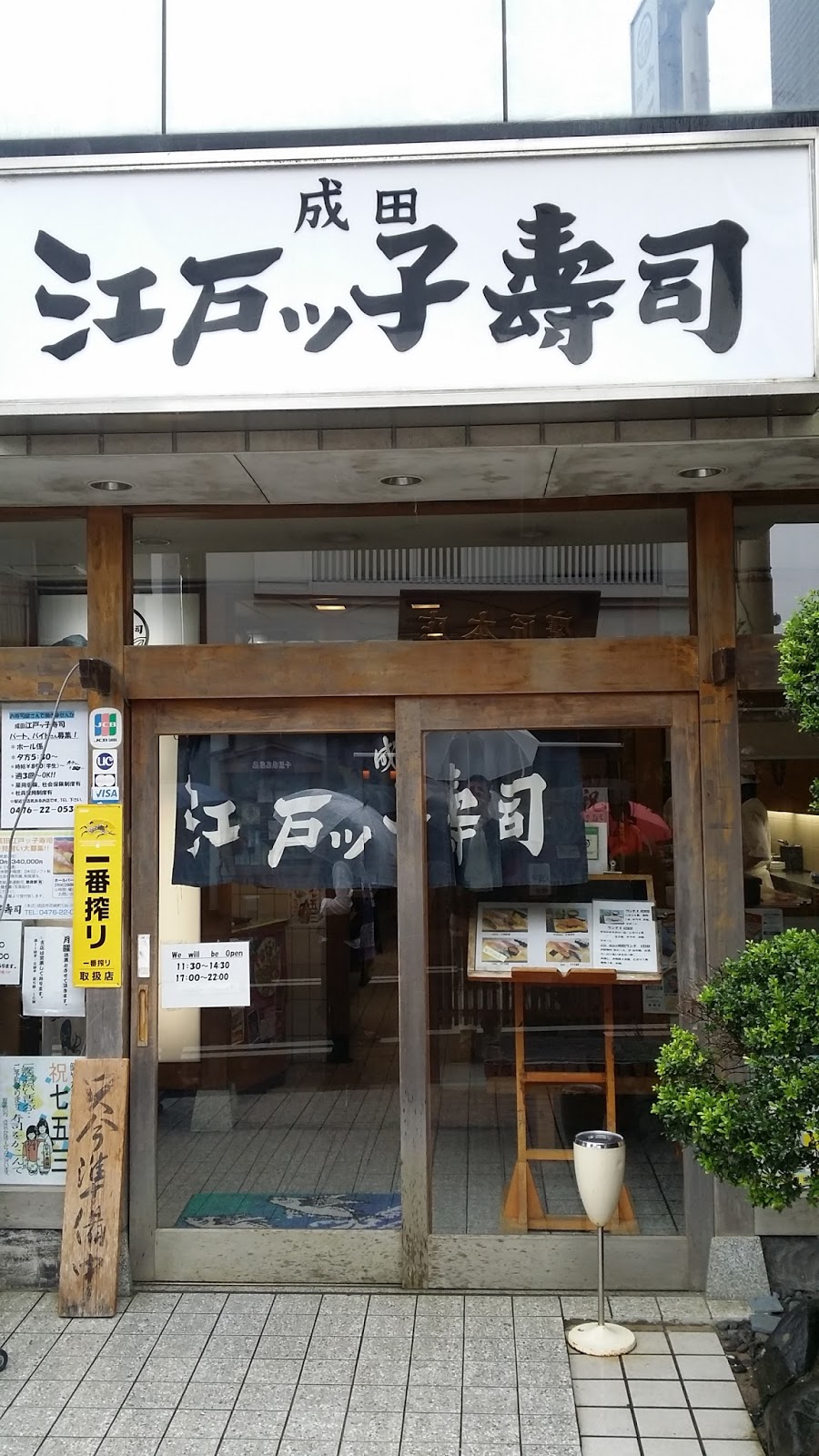
Edokko Sushi: Sushi for your Layover

Nama Kaki (Raw Oyster) 800 yen

Narita Airport is often seen as nothing more than the portal to mainland Tokyo. Before operations at Haneda International Airport commenced, most tourists would bypass Narita before hitting Tokyo and not many people would think of Narita as a destination itself.

But speak to any flight crew who has transited here and a handful of them might tell you the wonder that is Edokko Sushi. Just one train station away from the airport and a 5 min stroll from Narita Station, luscious and succulent sushi await the curious and adventurous.

Nothing beats freshly moulded sushi for breakfast so I kick-started my day with a humongous raw oyster. A small dollop of negi and red radish with a dash of ponzu topped the aphrodisiac. It took considerable self-control to not let out a moan of pleasure.

Matsu Set 2800 yen.
 Left to Right: Chutoro, Engawa, Kazunoko (Salted Herring Roe), Hotate (Scallop), Botan Ebi, Tamago Yaki, Uni, Tekka Maki and Anago (not shown in this picture)

2800 yen got me a spectacular array of Edomae Sushi. Each piece was carefully hand-moulded and placed directly on top of the chiller by the chef.

Out of the set, the Chutoro and Botan Ebi were the highlights and distinguished itself from the other sushi. That said, the other sushi were all prepared with meticulous care and the fish were all fresh and clean tasting.

Chutoro

I simply love the Fish to Rice Ratio (about 3:1). The length of the Chutoro is long enough to wrap the rice fully, and sinking my teeth into it was just pure bliss.

Uni

The Uni here was pretty decent too. Though not top grade and slightly darker in colour, it was still briny and buttery albeit not as creamy as I would have liked it to be,

Anago (Conger Eel)
Special mention must be given to the Anago here. Considering the price I paid, I half-expected the Anago to fall short of expectations, but was pleasantly surprised instead. The Anago was still warm despite it being the last piece to be consumed. The texture was melt-in-the-mouth as all Anago should be with the Tare (sauce) providing a subtle sweet finish.

Kohada (Gizzard Shad) 300 yen
I cannot leave any Edomae Sushi shop without tasting the Kohada, it being one of the 3 traditional Edomae sushi yardsticks and a personal cult favourite of mine. Edokko did not disappoint as well. The Kohada was sufficiently marinated in a secret mixture of their house vinegar. The flavour was rounded without being too sharp or overpowering and provided a slight acidic undertone.

Braving the chilly wind and downpour on a cold winter morning was worth it, if only to have a bite of authentic Edomae Sushi from the friendly chefs here at Edokko.

The next time you're having a long layover at Narita, Edokko is the perfect place to satisfy your incessant sushi cravings. The close proximity to the airport and reasonable prices are also good reasons to pop by.


Edokko Sushi
536-10 Hanazakicho, Narita 286-0033, 
Chiba Prefecture

Alight at Narita Station on the Keisei Main Line from Narita Airport.

Tuesday, 28 April 2015

Shinji By Kanesaka. The Epitome of Edomae

Sawara (Spanish Mackerel)

I could not help it.

I was so enamoured of my last visit to Shinji, I found myself making reservations to re-live the wonder and magic of such an illustrious institution and proud bastion of Japan's oldest food traditions. Armed with a little extra cash from the Chinese New Year ang pows, my dining companions and I took our seats at the smooth and flawless hinoki wood counter and embraced the serenity, silence and anticipation of the symphony of sushi that was to follow.


Shima Aji (Striped Jack)
The 12 piece "Tsuki" (月) lunch set commenced with the usual shiromi dane suspects. The sawara and shima aji were on form, awakening my taste buds with their light, clean, and  refreshing nature. Freshness is paramount for fish of this category in order that full justice can be done to them, and their flavours brought out fully. Needless to say, the skillful and experienced itamae delivered duly.


Sayori (Half-beak/Needlefish)

I was beyond delighted to know that I would have the rare opportunity to partake in such a rare tane on this visit. Sayori is best served in spring, and my maiden experience was one to remember fondly. The texture is slightly firmer but not chewy. The flavour profile is again similar to the other fish like flounder and the striped jack.


Chutoro (Medium Fatty Tuna)

I met my old, velvety, crimson friend laying so seductively on a bed of perfectly seasoned shari. The chutoro once again passed with flying colours with its deep and full bodied flavour, with the moderate streaks of marbling providing a touch of richness. 


Shimofuri Otoro (Fatty Tuna Belly with "Snow frost Marbling"

The term "Shimofuri" refers to the marbling pattern of maguro that largely resembles a "snow-frost" pattern, and is usually found on the premium cuts like the 'hoho' (cheek) and 'noten' (head) parts of the fish itself. It is almost impossible to chew on the otoro at all since the fish was almost melting the moment the heat from the tongue permeated through the tuna belly. Expertly moulded with top quality Japanese rice, this is indulgence at its finest.


Aji (Horse Mackerel)

Holding its own against the more sinful and easy to enjoy counterparts, the Aji itself was a force to be reckoned with. It may not boast the creamy and buttery characters of the chutoro and otoro, but what it lacks in texture, it more than compensates in flavour. The Aji is the most prized fish of its category (hikari mono or 'shiny fish'), and it may give off an unpleasant fishy odour that may threaten to upset the progression of sushi if not handled well. But we were to have none of that here in Shinji, testament to the finesse and mastery of the chefs.


Katsuo/Bonito (Skipjack)
We are familiar with the bonito fish in the form of flakes that we sprinkle over our takoyaki (grilled octopus balls), but to taste the skipjack in its raw form is always a treat. I was lucky enough to have it back in Osaka's Koyoshi Sushi, and I was glad to have it here again in Shinji. The aroma undoubtedly conforms to the flavour of the bonito flakes which will trigger memories. But the taste and texture itself is almost similar to the lean tuna. This is perhaps the only other fish belonging to the akami dane (red-flesh fish) category aside from tuna.


Hokkaido Uni (Sea Urchin)
There were many audible "oohs" and "ahhs" resounding from my party as the chef removed this box of golden, luscious uni. A sushi topping never to be missed under any circumstances, we waited eagerly as our chef moulded the gunkan for us.


Uni Gunkan

Uni. You either love it or hate it, and I consider myself blessed to be able to enjoy this delicacy.
Bad uni can have the consistency of slime and a taste similar to wastage found in sewerage systems, which may explain why people may shun away from such an indulgent ingredient. Good uni like the one here is the complete antithesis of it. Creamy, buttery and ever so seductive, it took all of my self-control to not ask for a second piece.


Negitoro (Minced Tuna Belly with sliced Japanese leek)


Nearing the end of our sushi course, the chef wowed us with a display of his knife skills as he minced up some tuna belly and expertly butterflied and cut up white Japanese leek and folded it into the mixture before topping it on the rice. The sushi was juicy with a slight sweet and sharp underlying tones which balanced the fatty tuna nicely.


Anago (Conger eel)

Almost always used as the grand finale, a piece of conger eel which has been boiled to a meltingly tender texture under the watchful eyes of the chef acts as the closure to the meal. The anago was clean, creamy and the sauce elevated the sushi to a whole new level.


Tamago
So, so deceptively simple...yet one taste of the quintessential tamago is enough for sushi connoisseurs to gauge the chef's skills. I am certainly no expert, but suffice to say I enjoyed every single last nibble of the fragrant, subtly sweet and custard-like texture of the tamago.


Warabi Mochi
Warabi Mochi is a jelly-like cake (similar to our local "muah chee") made from broken starch and dipped in kinao (sweetened and toasted soybean flour) and then drizzled with some palm sugar syrup. Slightly nuttier than the common mochi, the dessert provided a lasting sweet ending to the meal...

Or did it?


Uni Rice. Sushi rice mixed with Sea Urchin, topped with ikura and Negitoro
About two-thirds into my set lunch, I spied a couple in the same room who seemed to be extremely occupied digging their way into a small bowl. Upon further enquiry with the chef who checked with us on any last orders, I confirmed my suspicions, threw caution to the wind and added one last item.

Uni, Otoro and Ikura. Some might dub these as the Holy Trinity of indulgences in the world of Edomae Sushi. When all three unite and come together, the results are divine, sublime and absolutely mind blowing. Words are simply unable to do sufficient justice to such a bowl fit for the gods.


The chef first scoops up some shari onto a bowl, places some uni into it and mixes the rice evenly so that every single grain is coated with that golden goodness. He then minces some otoro and leek and places it on top, and 2 generous scoops of ikura then flank the bowl, and the trinity is complete.

I've been asked before "What would your last meal be?". I've searched and pondered deeply for years, constantly looking for a single dish that would let me go out with a bang. At long last, I have found it, and I am glad to be alive to tell the tale. A big bowl of Uni, Otoro and Ikura would be a fitting end.

Thinking to myself that nothing could top my virgin visit to Shinji, I was proven utterly wrong this time. The food, service and ambience are stellar and second to none. I highly doubt any other sushi-ya will be able to displace Shinji, save for maybe Jiro or Saito in Japan itself.

A meal at Shinji by Kanesaka is not just a dining experience; it is a spiritual encounter between you, the sushi and the chef.


Shinji by Kanesaka
#02-20, Raffles Hotel
1 Beach Road (Via Seah Street Lobby)
Singapore 189673

Lunch Hours: 12pm to 3 pm
Dinner Hours: 6.00pm to 10.30pm

Closed on Sundays.

Nearest MRT Station: City Hall

Link to their website.

Tuesday, 23 September 2014

Hanare Japanese Cafe: A Champion's Chirashi

Bara Chirashi Set: $17.60
Take a stroll along Tanjong Pagar, and you'll see hordes of office workers trying their luck to get into Teppei, which has a 6-month long waiting list for their Omakase dinners.

But just a mere 50 steps away and tucked into the second storey of a shophouse, is its smaller counterpart which still offers great value to diners looking to get their bang for the buck. Think a bowl of warm rice topped generously with chunks of tuna, salmon, some slivers of scallop and some ikura hidden elusively in the bowl. The luscious pieces of fish are chilled adequately, thereby giving an important temperature contrast with the rice, and seasoned with shoyu for a little extra flavour. To my surprise, the restaurant actually provides real wasabi (not your typical horseradish paste spiked with green powder) to go with the Chirashi which was a really nice gesture.

The Bara Chirashi also comes with a free flow of 4 side dishes from the buffet counter, but the appearance of the food in the counter put me off so much I did not want to risk ruining my taste buds and wasting stomach space.

At $17,60, you'd be hard-pressed to find a place that can offer quality and quantity at this price range. Truly a bowl of scattered sushi worthy of champions, Hanare's Bara Chirashi is worth its weight in gold.

Hanare Japanese Cafe
99B Tanjong Pagar Road
Singapore 088250
6222 1976

Operating Hours:

Mondays to Sundays
Lunch: 1200 - 1430
Dinner: 1830 - 2200

Closed on Sundays

Nearest MRT Station: Tanjong Pagar

Please note that they do not accept reservations.


Thursday, 4 September 2014

Kaiho Sushi: Stick to the Aburi Sushi.

Hotate Mentaiyaki (Scallop grilled with Spicy Cod Roe Mayonnaise) $25

I love Cuppage Plaza despite its sleazy and seedy outlook, for it houses authentic Japanese Food and many local Japanese frequent the various joints here. With a good mix of Sushi-yas, Yakitori Restaurants and Izakayas, I can take my pick and select whatever I feel like having, and on this occasion, it was Sushi.

Taking a leap of faith, I ventured into Kaiho Sushi with a friend, but I decided not to go for Omakase and play it safe with a few ala carte items and a sushi set.

For starters, my friend ordered the Hotate Mentaiyaki and it arrived warm and moist. I tried a small teaspoon of it, and I was happy to find that the scallop was sweet and juicy and the Mentaiko was lip-smackingly savoury and creamy but did not overpower the shellfish. I particularly loved the bits that were charred which gave a nice contrast to the dish itself.


Aburi Salmon Nigiri ($5 a piece)

Aburi Sushi is always a delight to order and this was no different. The salmon was lightly cooked on the outside, but still retained its texture and flavour with the tsume (sauce that is put on sushi) bringing it up a notch.


Wagyu Aburi Nigiri ($15)

Blowtorched Wagyu on Sushi Rice. It's a no-brainer, impossible-to-fail sushi. The wagyu was smoky, juicy and evenly marbled and drizzled with a little tsume. If only it wasn't $15 a piece I would be popping this into my mouth freely.


Sushi Mori Set (9 pieces of assorted sushi.) $58
2 pieces Hirame (Flounder)
1 piece Otoro (Fatty Tuna Belly)
2 pieces Tai (Sea Bream/Snapper)
2 pieces Salmon
2 pieces Akagai (Red Clam)

Sadly, this was the disappointment of the entire meal.

The menu stated "9 pieces of assorted sushi". I naturally assumed it would mean 9 different kinds of sushi. But the chef gave me 2 pieces of 4 different types of sushi, with one single otoro. I could not help but feel shortchanged. The tai and hirame are not exactly the most expensive of fish, and I felt he could have given a better variety. The only saving graces were the Salmon and Otoro. The others were barely passable in my books. Suffice to say I was so unwilling to part with $58 for this set.

Oh, and a word of warning. By the 4th piece, the wasabi present in the nigiri was overwhelming and I started tearing, and this comes from a person with a high wasabi-spice tolerance level. This being my first time here, I did not know that the chef would be so liberal with the usage of his wasabi, so do tell him to go easy should you ever come here.


Kohada (Gizzard Shad) Nigiri. $9 a piece


Kohada is usually salted and cured in vinegar in order to kill bacteria and remove the "fishy smell" commonly found in fish of the Hikari Mono (shiny matter) category. To bring out the true flavour, it is up to the chef to determine how much to salt the fish, and how long he must leave it in the vinegar in order for the marinade to penetrate through the skin and flesh so that he can achieve the optimal quality.

Attempting to give Kaiho Sushi another shot at the Edomae Sushi, I went for the Kohada and I realized it was a mistake.

Once again, I was let down because the taste was simply negligible and the finish was not as long as I would have liked. The fact that the skin of the fish here was quite rough as well, served as another negative indicator.

Frankly, it is quite difficult to go wrong with Aburi Sushi, and many places offer it nowadays, even in the massive sushi chain shops. I was hoping that Kaiho Sushi would be able to offer at least passable Edomae sushi alongside its blowtorched specialities, and it was found wanting. Despite its competence in Aburi Sushi, I could probably get better value elsewhere. I left feeling discontented. My stomach had its fill, but my taste buds were still left hanging.

Singapore has come a long way in the quality and authenticity of the Sushi served here. But am I only able to get good Edomae Sushi in restaurants that charge up to $300 for Omakase? Is there no place here that can do decent, traditional sushi without burning a hole in my pocket? Alas, my search continues...

For Kaiho, my advice is just to stick to the Aburi Sushi, and maybe go for the cooked items if you are feeling adventurous.


Kaiho Sushi
#03-01 Cuppage Plaza
5 Koek Road
6738 1315

Operating Hours:
Tuesdays to Sundays
Lunch: 1200 - 1430
Dinner: 1830 - 2300
Closed on Mondays

Nearest MRT Station: Somerset

Monday, 4 August 2014

Hakumai Sushi and Omakase: Great Sushi, Great Value.

Sashimi Platter: Salmon, Maguro, Botan Ebi, Swordfish, Sawara, Herring Roe, Torigai.


What happens when you get a craving for some really good sushi and you do not want your typical chain restaurants, but you are unwilling to spend hundreds of dollars for an Omakase?

You go to Hakumai, that's what.

Much as I would like to do a full Omakase with the works and extras, there are just times when the heart is willing, but the wallet says otherwise. That said, at $68.80++, Chef Gary has truly given me my money's worth, and has consistently maintained his standards, very much like my last visit.

Starting with a Sashimi Platter, each fish and ingredient was fresh and meticulously sliced and presented to me.


Truffle Chawanmushi with Prawn and Enoki Mushrooms.

I could not help but be taken aback by Gary's new take on his Chawanmushi. Piping hot egg custard swimming in a thick, strong dashi broth drizzled generously with truffle oil. With a little yuzu to cut through the richness and strength, this is comfort food on a whole new level.


Tai-kama Shioyaki: Salt-grilled Snapper Cheek

The hot food of Hakumai is not to be understated too. The chef showcases his mastery of the grill by simply salting the cheek of the Snapper and grilling it till the skin is crispy and slightly charred, and the flesh inside is flaky, moist and juicy. Throw your dining etiquette out of the window (or counter) and get your hands dirty!


Sushi Platter from top to bottom: Ikura gunkan, Aburi Scallop with Mentaiko, Aburi Mekajiki topped with yuzu pepper, Salmon and Maguro topped with bonito flakes.


The sushi today was as excellent as before. Generous slices of fish sitting snugly on a bed of Niigata sushi rice, with the blow-torching process melting the oils of the fish and giving it a nice smoky flavour.

Aburi Botan Ebi with Foie Gras (Additional Order: $30 for 2 pieces)

But no trip to Hakumai can ever be complete without their signature sushi: The blowtorched botan prawn topped with goose liver. This is truly an orgasmic experience where you need to close your eyes and fully appreciate the creamy, smoky, rich and freshness of each individual component. The prawn and goose liver go together like coffee and milk. Do not ever leave Hakumai without having this.


Chef Gary Ng

I can't recall a time where I was disappointed by Gary-san and his team. Service is prompt and friendly, and Gary's skills as seen and tasted in the sushi he makes, coupled with his jovial and cheerful nature gives me a relaxed and lively atmosphere for me to dine in. Hakumai is able to cater to different price ranges so it really gives customers more options and choice, and I'm glad to say the restaurant does not compromise on quality or quantity even if you spend on the less expensive items or set menus.

A place for all occasions, Hakumai gives you wonderful sushi without burning a hole in your pockets.


Hakumai Sushi & Omakase
#01-50A International Plaza
10 Anson Road
Singapore 079903
Contact No: +65 6224 4790

Operating hours:
Closed on Sundays
Lunch: 11.30am to 3.00pm
Dinner: 6.00pm to 10.30pm
(Last Orders are 45 minutes before closing)

Nearest MRT Station: Tanjong Pagar

Friday, 4 July 2014

5 Places to have Omakase in Singapore


Kama-Otoro Nigiri at Hashida Sushi

Let’s face it. We Singaporeans love Japanese cuisine and those who are serious about it will pay hundreds of dollars for an Omakase meal without blinking an eye. Be it for a special occasion or to simply pamper ourselves, there is nothing like sitting at a Sushi counter and having a chef who has trained for years to personally mould sushi right in front of us before we pop the little orgasm bombs that give us a glimpse of what heaven can taste like.

The term “Omakase” means “to entrust”. Simply put, you sit down at the counter and the chef will serve you a menu course-by-course (similar to a degustation) featuring the restaurant’s signature items or specials of the day. Although an Omakase can feature appetizers and side dishes, it is the Sushi that takes centre stage. A typical Omakase costs about $150, but depending on your appetite and wallet, it can go up to as high as $300 so do not be afraid to enquire on the prices first.

With many establishments available here in Singapore, the choices and possibilities are endless. So here are 5 places to go for an Omakase.


Otoro Nigiri


1)         Shinji by Kanesaka
With 2 branches here in the Raffles Hotel and St Regis Singapore, “Shinji by Kanesaka” is the eponymous overseas extension of the original Sushi Kanesaka in Tokyo, Japan. Aside from the unquestionable quality of the food which is simply sublime, the good folks here pay great attention to the minute details like the material of the sushi counter (which is made from prized ‘hinoki’ or cypress wood), the wares used for the preparation of their sushi, and the ambience itself to ensure a complete experience. Rumour has it that a Japanese diner was reduced to tears after he laid his hands on the cypress wood sushi counter, saying that it reminded him so much of his home which he badly missed.
It feels almost ritualistic dining in here, and the whole atmosphere can feel quite formal if not for the friendly and jovial chefs whose life mission is to ensure that you are served only the best of what they have to offer.

Shinji By Kanesaka
#02-20 Raffles Hotel
1 Beach Road

http://www.shinjibykanesaka.com/raffles/index.html


Click here for the full post.


Uni Gunkan
2)         Nogawa Japanese Restaurant
This is undeniably the pioneer restaurant for sushi and Omakase in Singapore. The place was opened in 1978 and was formerly run by Sushi Master Yoshio Nogawa (who has since returned to Tokyo). Nogawa is still often regarded as the forefather of Japanese Cuisine in Singapore, and he took in many students who went on to become specialists in their own right, most notably Chef Ronnie Chia of Tatsuya. Step into his restaurant and you will find many pictures showing Nogawa-san standing beside prominent political figures like Minister Mentor Lee Kuan Yew and former President S R Nathan. But aside from the fame, this is the place for the die-hard traditionalists and purists of Edomae Sushi.

Nogawa Japanese Restaurant
#03-25 Concorde Hotel
100 Orchard Road


Aburi Botan Ebi with Foie Gras Nigiri

3)         Hakumai Sushi & Omakase
Look no further than Hakumai Sushi and Omakase if you seek a modern twist to your sushi. Owner Chef Gary Ng (also a student of Master Nogawa) has finally settled down at his new restaurant located in International Plaza after moving from his previous places at Hinoki and Kome. The signature of Hakumai lies in their “Aburi” or “blowtorched” sushi.  It brings the sushi to a whole new level with a process of experimentation that yield results such as the “Aburi Botan Ebi and Foie Gras” sushi shown above. It is basically a large botan ebi which is first butterflied and topped with a sexy piece of goose liver and blowtorched to give off a smoky aroma. The freshness of the prawn together with the creamily sinful foie gras is guaranteed to make anyone fall in love with Aburi Sushi. This is just one of the many more unique Sushi here at Hakumai and the possibilities are only limited by the creativity of the chefs here.

Hakumai Sushi & Omakase
#01-50A International Plaza
10 Anson Road

Click here for the full post.


Uni and Ikura mini donburi


4)         Hashida Sushi
Another heavyweight Japanese import from Tokyo,  Hashida Sushi is run by the 35-year old Kenjiro “Hatch” Hashida, son of Master Tokio Hashida. Chef “Hatch”, a graduate of the prestigious ‘Tsuji Culinary Institute’, makes frequent trips between Singapore and Japan to ensure operations and supplies are smooth and consistent in order that Hashida delivers top end sushi to its guests.
Hashida Sushi takes exceptional pride in the quality of their tuna, importing a whole fish that can weigh up to a 100 kilograms at a time. Needless to say, their otoro (Tuna belly) sushi is a must-try here. If you are feeling indulgent, the beverage list here features high end sake, Champagnes and vintage wines to go along with your Omakase.

Hashida Sushi
#02-37 Mandarin Gallery
333A Orchard Road

Click here for the full post


"Hamburg Sushi".
 Flying Fish Roe, Winter Bamboo shoot, Salmon, Tuna, and Surf Clam Sushi. 


5)         Meii Sushi
Unlike the previous restaurants which are more famous, Meii takes on a more quaint and exclusive demeanour. The only marketing tool employed here is word of mouth, and it was not really featured in online articles until recently. This is not your typical sushi joint because the sushi here is rustic, unpretentious and sometimes a little unglamorous. Basically, the only aspect not compromised here is the taste and quality of their products and Chef Hong loves to cut his fish into large, thick slices so when you sink your teeth into that highly marbled Otoro, the flavours are amplified dramatically, and if you are not careful you might just let out a moan or a sigh of pure ecstasy. Chef Hong here does take a break from tradition once in a while and comes up with unusual creations for his regular customers like the “Hamburger Sushi” shown above. It features different types of fish and other ingredients all in one nigiri, and the taste is simply unimaginable and indescribable. You have to try it for yourself.

A note of caution: Chef Hong is a man who shuns away from the limelight and loves his privacy in his humble abode. He has chased people away before who were being unreasonable and over demanding. So do reserve a seat in advance, inform him of your dietary restrictions beforehand, and ask for permission before you take photos. Just follow these rules and you'll be treated to a spectacular array of overflowing sushi.

Meii Sushi
#02-54 International Plaza
6220 3346

Click here for the full post.


Final Notes
An Omakase is truly the best way to enjoy Japanese cuisine at its finest because it showcases the skills and techniques of the Chef and it also features seasonal produce that are only available in certain periods of the year. The next time you have extra cash, go to any of these 5 restaurants for an unforgettable Omakase experience.