Sunday, 15 November 2015

Ukai-Tei Omotesando: Top-notch Teppanyaki


Teppanyaki: A visually engaging gastronomical experience where guests are seated at the counter with chefs meticulously preparing the ingredients in front of you. A toss of a spatula and a swift movement of the knife, the day's freshest are magically transformed into exquisite dishes.

Ukai-Tei Omotesando elevates it to the next level. Situated at and occupying the entire 5th floor of a small shopping building, the premises offers a panoramic view of the Omotesando skyline, complemented only by the artisanal and specially selected furniture located at the waiting room as guests eagerly await their turn to be seated.

Chilled Hokkaido Queen Crab served with Crab Consomme Jelly 
Freshness is guaranteed in such high end places. The queen crab starter was pleasantly sweet, awaking the taste buds and the crab consomme jelly added depth to an otherwise light appetizer.

Pan-seared Foie Gras with Poached Figs.

Foie Gras is an ubiquitous item in fine dining and Ukai-Tei was no exception. The Foie Gras was sinfully creamy, rich and luscious as expected. The differentiating factor, however, was the fig. Accompanying ingredients to  goose liver (poached pear or daikon) often play second fiddle and are disregarded and cast aside. The humble fruit here, played the ultimate supporting role by being even more meltingly tender which was so unexpected, and its mild acidity contrasting the heavy goose liver. Leave it to the Japanese to achieve excellence by always looking at the details.

Chestnut Soup
Due to the limited English displayed on the menu with practically no descriptions of the dishes, I naturally assumed the Chestnut Soup would be a palate cleanser. Oh how wrong I was.

A creamy and piping hot broth with incredibly complex flavours bombarded me and I was sorely taken aback at the level of finesse executed in such a normal and relatively uninteresting looking dish. The soup was soothing to the stomach and the soul on a cold, wet afternoon. I regret not asking the staff more about this humble soup.

Japanese Lobster with bisque, topped with Cherry Tomatoes and Fresh Tarragon


Progressing to the mains, our personal chef carefully butterflied a whole lobster and separated the head from the body and proceeded to work his magic. The meat was completely pried out off the shell easily and topped with bisque and tomatoes. The tarragon, like the fig in the foie gras before, played an important role once again by imparting a lingering fragrance which whetted the appetite and further heightened the anticipation.

Fresh, scrumptious, meaty and infused with the crustacean flavours of the bisque, the dish was a clear winner in my books. It was substantial yet not too filling, and the tomatoes rounded it all up with the intense umami.


Grilled Lobster Head
Our polished and professional maitre'd inquired on our preference on how we would like the lobster head to be cooked. We went with his recommendation of simply adding salt, pepper and a dash of cognac and letting it sit on the grill.

This was it. The entire essence of a lobster condensed into  a half-shell. The tomalley was mind-blowingly sublime and I was nearly entering a crustacean-induced trance.


Seared Abalone with Aoyama Wakame topped with Citrus Butter
Abalone is often shunned as a rubbery and tasteless mollusk, only making appearances in Chinese dinners due to its perceived value. The Japanese Kuro-Awabi (Black Abalone) challenges the stereotype with its mild fragrance and flavour. Under the hands of a skillful chef, it becomes a tender shellfish that gives a nice chew. Lightly prying it off the shell, the abalone was encased in 2 large pieces of shiso leaves and covered completely in a salt crust for about 20 minutes. The chef then proceeded to make a yuzu butter sauce topped with parsley and sliced Aoyama wakame.

After the abalone was ready, the chef made deft incisions into the shellfish, criss-crossing it in order that it would absorb the sauce better. The butter sauce was so seductive yet perfectly balanced at the same time, it is difficult to think of a better pairing.

A5 Kuroge (Black Haired) Wagyu
As with most Teppanyaki places, beef is the choice meat to showcase the quality of its ingredient selection; an A5 grade wagyu, no less.

As our chef showed us the sirloin laying seductively on a pristine porcelain plate, we were gushing with excitement and requested it to be done "rare". Medium Rare is normally the optimal choice for steak, but for Japanese Wagyu, I would go one step down to "Rare" to savour such a delicate and beautiful piece of beef.

A5 Kuroge Wagyu done Rare. Paired with Garlic Chips and sliced white onion.

Few ingredients in the world elicit "oohs" and "aahs" from diners. As the chef seared the beef carefully on the teppan, the intense beefy fragrance wafted through anyone in a meter radius, sending olfactory senses into overdrive.

My eyes were closed as I sank into the beef. It was a tranquil moment between man and meat which no other external forces could interfere as I sat there, awestruck by the floral fragrance with the unbelievable marbling intensifying the umami flavours. The garlic chips and sliced onions cleansed the palate as I re-entered beef heaven for the remaining 7 cubes.

Steamed Japanese Sea Bream Rice
Concluding the savoury menu was the steamed Japanese Sea Bream Rice. The fish itself was sashimi-grade, still retaining its delicate nature despite being cooked fully through, and the skin was flavourful. The rice was clean and pristine and absorbed the flavours of the fish and cilantro well.


Liquor Trolley
We were escorted into a separate room for dessert. What greeted us was a 2-tier trolley stacked fully with all sorts of liquers and spirits. Cognacs, Armagnac and Aged Port wines were all available.

Mont Blanc
I opted for the Mont Blanc upon the waiter's recommendation. The chestnut butter cream and vanilla sauce sat nicely with the fresh chestnuts and provided a sweet ending to a sublime lunch.

Chocolate Sundae
The Chocolate Sundae was not bad as well. Freshly whipped cream topped with chocolate shavings and chocolate sauce, though I could not help noticing it looked more like a Tiramisu instead.

Petit Four Trolley
Sweet-toothed guests and ardent dessert lovers can unleash themselves as the Petit Four Trolley offers unlimited servings of a wide array of tiny desserts and pastries.

Petit Four: Cassis Macaron and Mont Blanc Tart.
The Cassis Macaron was my favourite of the lot as it was fruity and light without being too overpowering. It made a comfy afternoon tea snack together with the coffee they provided.

Chocolate Truffles and Madeleines 
The chocolate truffles were the epitome of a sweet indulgence. They were dark and rich with a splash of liquor. Chocoholics, please take note.

The food here is unquestionably sublime and the quality is of the highest level possible already. From the selection of the ingredients to the preparation, every single factor was taken into account which provided a complete dining experience. I loved that their herbs and garnishes used in their main dishes really brought out the dish.

Napkins with hand-sewn embroidery


Special mention must be given to the top-notch and highly professional service. From the moment we entered, we were greeted warmly by the impeccably dressed hostess who spoke fluent English, and she offered to stow away our coats. Each action and gesture was precise and elegant.

The tableware and service gear were all intricately designed and felt classy and posh to the touch. Every single plate that the food was on, were all specially designed which only added to the visual aspect. The menu cover itself was red velvet, which made the first tangible service encounter so deeply embedded in my mind.

Upon leaving the restaurant, the service staff got the lift for us, and walked us all the way out from the restaurant to the exit of the building and even offered to call a taxi for us in lieu of the heavy downpour outside, to which we politely declined.

Despite not serving entirely traditional ingredients, the  lunch experience I enjoyed here could not have been more Japanese. Every single detail and aspect was considered for, leaving nothing to chance.

This is one of the more, if not the most memorable 4 hour journey I've had the fortune to experience thus far in my gastronomic adventures. They are fully deserving of all praise and accolades that have been awarded to them and more.

Omotesando Ukai-Tei
5-10-1 Omotesando-Gyre 5th Floor,
Jingu-mae, Shibuya Ku,
Tokyo.

Nearest Station:
Omotesando on the Chiyoda/Hanzamon/Ginza Line.
5 Minutes walk. Take Exit A1

Operating Hours:
Mondays to Fridays

Lunch:12:00 - 14:30
Dinner: 17:30 - 23:00 (Last Order at 21:00)

Saturdays
11:30 - 23:00 (Last Order at 21:00)

Reservations via Hotel Concierge highly recommended.

Link to the website (English)


Sunday, 8 November 2015

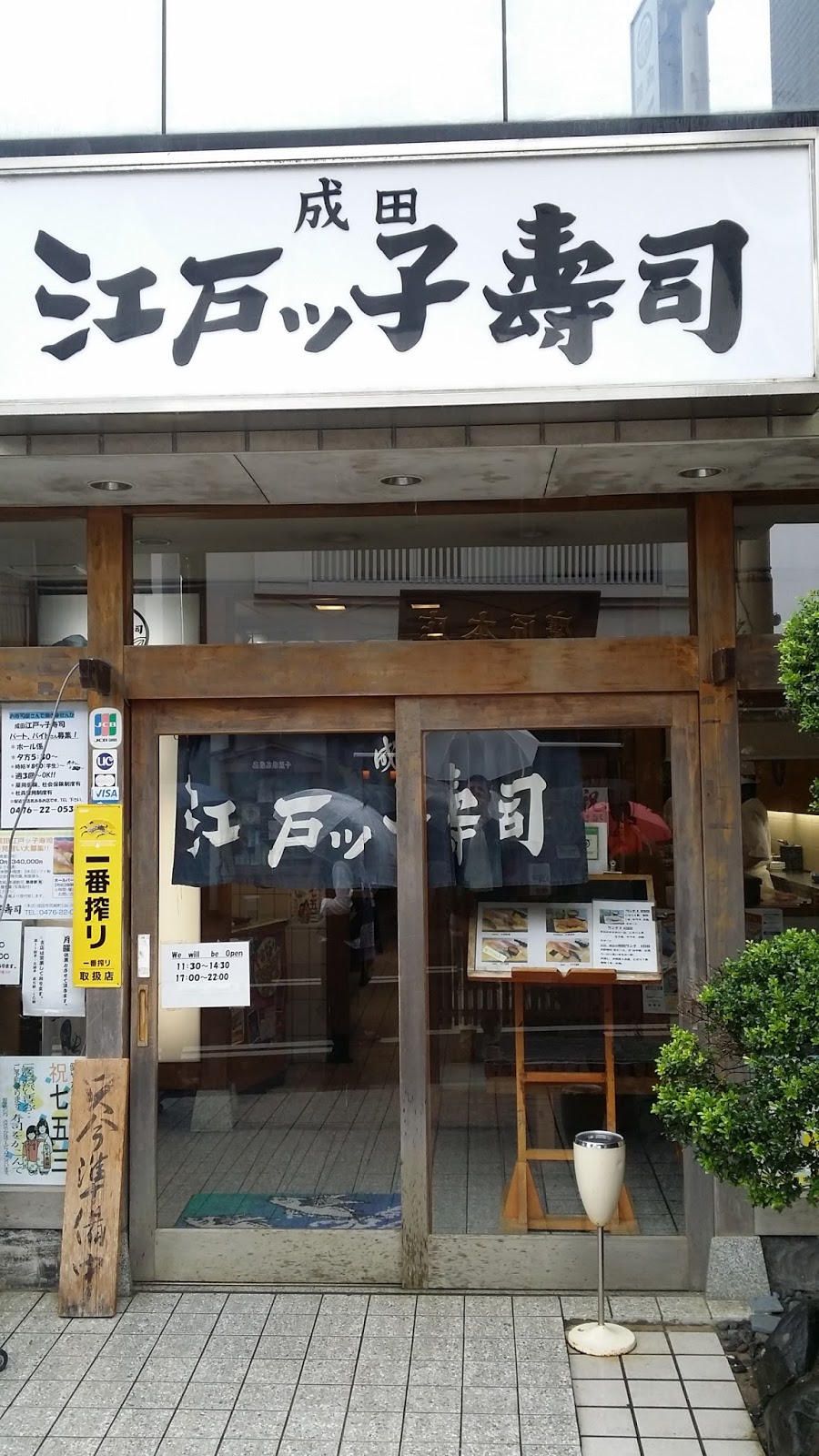
Edokko Sushi: Sushi for your Layover

Nama Kaki (Raw Oyster) 800 yen

Narita Airport is often seen as nothing more than the portal to mainland Tokyo. Before operations at Haneda International Airport commenced, most tourists would bypass Narita before hitting Tokyo and not many people would think of Narita as a destination itself.

But speak to any flight crew who has transited here and a handful of them might tell you the wonder that is Edokko Sushi. Just one train station away from the airport and a 5 min stroll from Narita Station, luscious and succulent sushi await the curious and adventurous.

Nothing beats freshly moulded sushi for breakfast so I kick-started my day with a humongous raw oyster. A small dollop of negi and red radish with a dash of ponzu topped the aphrodisiac. It took considerable self-control to not let out a moan of pleasure.

Matsu Set 2800 yen.
 Left to Right: Chutoro, Engawa, Kazunoko (Salted Herring Roe), Hotate (Scallop), Botan Ebi, Tamago Yaki, Uni, Tekka Maki and Anago (not shown in this picture)

2800 yen got me a spectacular array of Edomae Sushi. Each piece was carefully hand-moulded and placed directly on top of the chiller by the chef.

Out of the set, the Chutoro and Botan Ebi were the highlights and distinguished itself from the other sushi. That said, the other sushi were all prepared with meticulous care and the fish were all fresh and clean tasting.

Chutoro

I simply love the Fish to Rice Ratio (about 3:1). The length of the Chutoro is long enough to wrap the rice fully, and sinking my teeth into it was just pure bliss.

Uni

The Uni here was pretty decent too. Though not top grade and slightly darker in colour, it was still briny and buttery albeit not as creamy as I would have liked it to be,

Anago (Conger Eel)
Special mention must be given to the Anago here. Considering the price I paid, I half-expected the Anago to fall short of expectations, but was pleasantly surprised instead. The Anago was still warm despite it being the last piece to be consumed. The texture was melt-in-the-mouth as all Anago should be with the Tare (sauce) providing a subtle sweet finish.

Kohada (Gizzard Shad) 300 yen
I cannot leave any Edomae Sushi shop without tasting the Kohada, it being one of the 3 traditional Edomae sushi yardsticks and a personal cult favourite of mine. Edokko did not disappoint as well. The Kohada was sufficiently marinated in a secret mixture of their house vinegar. The flavour was rounded without being too sharp or overpowering and provided a slight acidic undertone.

Braving the chilly wind and downpour on a cold winter morning was worth it, if only to have a bite of authentic Edomae Sushi from the friendly chefs here at Edokko.

The next time you're having a long layover at Narita, Edokko is the perfect place to satisfy your incessant sushi cravings. The close proximity to the airport and reasonable prices are also good reasons to pop by.


Edokko Sushi
536-10 Hanazakicho, Narita 286-0033, 
Chiba Prefecture

Alight at Narita Station on the Keisei Main Line from Narita Airport.

Sunday, 31 May 2015

Ippin Cafe Bar. A lazy afternoon of Mom's cooking


This is an invited review.

Oyako Don Set. $15
"You can use the most exquisite ingredients, prepared by the world's greatest chef and serve it in the most luxurious and posh of restaurants, but it will never beat my mom's cooking".

I'm sure for many of us, mom's cooking holds a special place in our hearts that nothing in this world can displace. Such is the vision of Ms Ayumi Fujishiro that she gave up her job in pursuit of her own dreams of bringing a little taste of her home in our sunny island.

This is reflected in the Oyako Don set. A generous bowl of Japanese barley rice (which lends a starchier flavour) topped with chunks of chicken boiled in a dashi stock and drizzled with runny egg.

In all honesty, I did not expect a casual Japanese eatery to use Japanese rice (because of its high cost), but I could sense the sincerity they put into such a simple homely dish. A small gripe I had was that there was too much sauce to the point where my rice was flooded. But otherwise, this made for a hearty set.


Deep Fried Oyster Set. $24 nett. Rice, Salad, Nikujyaga Stew and Fried Oysters.


Fried Hiroshima Oysters


The Deep Fried Oyster set is definitely the highlight of Ippin. 5 plump and juicy oysters are fried to a golden crisp with a smooth, creamy texture. The oysters used in Ippin are imported from Hiroshima, which has a history of oyster cultivation dating back almost 400 years. About 70% of Japan's volume of oysters are harvested from Hiroshima itself and Ippin has taken that extra step to bring in only products from home.

Taste wise, the oysters were definitely creamier than most other fried oysters while still retaining the briny profile. Each piece is indulgent and appetizing to the last crumb.


Grilled Oyster and Veggies in Ponzu Butter Sauce Set. $20 nett

Grilled oysters with cabbage, carrots and ponzu butter sauce

If the fried mollusks are a little too heaty, consider its grilled counterpart instead. The same Hiroshima oysters are placed inside aluminum foil topped with cabbage and carrots and drizzled with a ponzu butter sauce.

I particularly enjoyed the ponzu butter sauce as it was rich yet fruity at the same time, while the vegetables provided sweetness and crunch to the dish. The oysters however, were slightly overcooked when prepared in this manner. Between the two, I'd opt for the fried version.

Yakisoba $12 nett
I was glad to see this item on their menu. Yakisoba is another one of my personal comfort Japanese foods. It may look like your typical chinese fried noodles, but that's where the similarities end. The type of noodles and sauce used are unmistakably Japanese and instead of a wok, the dish is fried in a teppan. Ippin's version is tasty and appetizing as well like all the other dishes preceding it, and I must make a point of mentioning its generous portion sizes once again.


Nikujyaga. Pork and Potato Stew.

But if there was one item on Ippin's item that could truly epitomize the word "home", the Nikujyaga has to be it. This is such an ubiquitous and common dish that is prepared by Japanese mothers who pack the lunches of their children before they go to school. Thinly sliced pork with cubes of potatoes and carrots, with slivers of rice noodles all brought to a slow boil with onions, soy sauce, mirin, sake and sugar.

The history of Nikujyaga is commonly attributed to Admiral Togo Heihachiro, a veteran of the Russo-Japanese war. It was said that during his studies in the UK, the Admiral grew a penchant for European food; beef stew in particular. Upon his return, he ordered the naval chefs to prepare a dish similar to it. But back then, condiments like butter and wine were still very much a foreign and unknown concept to the Japanese, so the chefs had to substitute them with soy sauce and sesame oil. Hence, the Nikujyaga was born.

The dish triggered memories of a home-cooked chicken and potato stew Mom used to make at home. It was by no means an "official" or "national" dish, but it was something replicated in the homes of people. The nikujyaga is similar in this aspect. The dish is served in small portions as a side dish to the other sets, but I would gladly take a full size serving of this with a bowl of Japanese rice.


Japanese Darjeeling Tea leaves

Japanese Produce. Teas, Sake, sauces, frozen products.


Ippin is not only a dining destination, but a fervent importer of Japanese products as well. The owner Ayumi-san is also a trained sake sommelier and the place offers a wide variety to choose from. There are craft beers from Kanazawa, tea leaves and tea bags from the Shizuoka prefecture and also many other condiments like miso pastes and sesame sauces. Most of the food from their kitchen employ these products, so it is quite possible to make the dishes they serve here in your own home too.
I could not resist the astringent and fragrant houjicha that was paired with the food so I bought a box of 20 bags home. They also have Sencha and Genmai-cha tea bags as well.


Kanazawa Hyajumangoku Beers. Koshihikari Ale, Pale Ale, Dark Ale and Granagri. All at $9 each.

Ippin extends a welcoming and homely environment for their guests to enjoy a lazy weekend afternoon over teas, sakes, beers or even a full complete meal. Customers who wish to get their hands on affordable Japanese products can come here to purchase them too.


Ippin Cafe Bar
18 Mohamed Sultan Road
Singapore 238967

Operating Hours:

Monday to Sunday
11.00am to 11.00pm

6733 4794

Nearest MRT Station: Clarke Quay

All prices include GST and Service Charge.
Free Wi-fi available.

Tuesday, 28 April 2015

Shinji By Kanesaka. The Epitome of Edomae

Sawara (Spanish Mackerel)

I could not help it.

I was so enamoured of my last visit to Shinji, I found myself making reservations to re-live the wonder and magic of such an illustrious institution and proud bastion of Japan's oldest food traditions. Armed with a little extra cash from the Chinese New Year ang pows, my dining companions and I took our seats at the smooth and flawless hinoki wood counter and embraced the serenity, silence and anticipation of the symphony of sushi that was to follow.


Shima Aji (Striped Jack)
The 12 piece "Tsuki" (月) lunch set commenced with the usual shiromi dane suspects. The sawara and shima aji were on form, awakening my taste buds with their light, clean, and  refreshing nature. Freshness is paramount for fish of this category in order that full justice can be done to them, and their flavours brought out fully. Needless to say, the skillful and experienced itamae delivered duly.


Sayori (Half-beak/Needlefish)

I was beyond delighted to know that I would have the rare opportunity to partake in such a rare tane on this visit. Sayori is best served in spring, and my maiden experience was one to remember fondly. The texture is slightly firmer but not chewy. The flavour profile is again similar to the other fish like flounder and the striped jack.


Chutoro (Medium Fatty Tuna)

I met my old, velvety, crimson friend laying so seductively on a bed of perfectly seasoned shari. The chutoro once again passed with flying colours with its deep and full bodied flavour, with the moderate streaks of marbling providing a touch of richness. 


Shimofuri Otoro (Fatty Tuna Belly with "Snow frost Marbling"

The term "Shimofuri" refers to the marbling pattern of maguro that largely resembles a "snow-frost" pattern, and is usually found on the premium cuts like the 'hoho' (cheek) and 'noten' (head) parts of the fish itself. It is almost impossible to chew on the otoro at all since the fish was almost melting the moment the heat from the tongue permeated through the tuna belly. Expertly moulded with top quality Japanese rice, this is indulgence at its finest.


Aji (Horse Mackerel)

Holding its own against the more sinful and easy to enjoy counterparts, the Aji itself was a force to be reckoned with. It may not boast the creamy and buttery characters of the chutoro and otoro, but what it lacks in texture, it more than compensates in flavour. The Aji is the most prized fish of its category (hikari mono or 'shiny fish'), and it may give off an unpleasant fishy odour that may threaten to upset the progression of sushi if not handled well. But we were to have none of that here in Shinji, testament to the finesse and mastery of the chefs.


Katsuo/Bonito (Skipjack)
We are familiar with the bonito fish in the form of flakes that we sprinkle over our takoyaki (grilled octopus balls), but to taste the skipjack in its raw form is always a treat. I was lucky enough to have it back in Osaka's Koyoshi Sushi, and I was glad to have it here again in Shinji. The aroma undoubtedly conforms to the flavour of the bonito flakes which will trigger memories. But the taste and texture itself is almost similar to the lean tuna. This is perhaps the only other fish belonging to the akami dane (red-flesh fish) category aside from tuna.


Hokkaido Uni (Sea Urchin)
There were many audible "oohs" and "ahhs" resounding from my party as the chef removed this box of golden, luscious uni. A sushi topping never to be missed under any circumstances, we waited eagerly as our chef moulded the gunkan for us.


Uni Gunkan

Uni. You either love it or hate it, and I consider myself blessed to be able to enjoy this delicacy.
Bad uni can have the consistency of slime and a taste similar to wastage found in sewerage systems, which may explain why people may shun away from such an indulgent ingredient. Good uni like the one here is the complete antithesis of it. Creamy, buttery and ever so seductive, it took all of my self-control to not ask for a second piece.


Negitoro (Minced Tuna Belly with sliced Japanese leek)


Nearing the end of our sushi course, the chef wowed us with a display of his knife skills as he minced up some tuna belly and expertly butterflied and cut up white Japanese leek and folded it into the mixture before topping it on the rice. The sushi was juicy with a slight sweet and sharp underlying tones which balanced the fatty tuna nicely.


Anago (Conger eel)

Almost always used as the grand finale, a piece of conger eel which has been boiled to a meltingly tender texture under the watchful eyes of the chef acts as the closure to the meal. The anago was clean, creamy and the sauce elevated the sushi to a whole new level.


Tamago
So, so deceptively simple...yet one taste of the quintessential tamago is enough for sushi connoisseurs to gauge the chef's skills. I am certainly no expert, but suffice to say I enjoyed every single last nibble of the fragrant, subtly sweet and custard-like texture of the tamago.


Warabi Mochi
Warabi Mochi is a jelly-like cake (similar to our local "muah chee") made from broken starch and dipped in kinao (sweetened and toasted soybean flour) and then drizzled with some palm sugar syrup. Slightly nuttier than the common mochi, the dessert provided a lasting sweet ending to the meal...

Or did it?


Uni Rice. Sushi rice mixed with Sea Urchin, topped with ikura and Negitoro
About two-thirds into my set lunch, I spied a couple in the same room who seemed to be extremely occupied digging their way into a small bowl. Upon further enquiry with the chef who checked with us on any last orders, I confirmed my suspicions, threw caution to the wind and added one last item.

Uni, Otoro and Ikura. Some might dub these as the Holy Trinity of indulgences in the world of Edomae Sushi. When all three unite and come together, the results are divine, sublime and absolutely mind blowing. Words are simply unable to do sufficient justice to such a bowl fit for the gods.


The chef first scoops up some shari onto a bowl, places some uni into it and mixes the rice evenly so that every single grain is coated with that golden goodness. He then minces some otoro and leek and places it on top, and 2 generous scoops of ikura then flank the bowl, and the trinity is complete.

I've been asked before "What would your last meal be?". I've searched and pondered deeply for years, constantly looking for a single dish that would let me go out with a bang. At long last, I have found it, and I am glad to be alive to tell the tale. A big bowl of Uni, Otoro and Ikura would be a fitting end.

Thinking to myself that nothing could top my virgin visit to Shinji, I was proven utterly wrong this time. The food, service and ambience are stellar and second to none. I highly doubt any other sushi-ya will be able to displace Shinji, save for maybe Jiro or Saito in Japan itself.

A meal at Shinji by Kanesaka is not just a dining experience; it is a spiritual encounter between you, the sushi and the chef.


Shinji by Kanesaka
#02-20, Raffles Hotel
1 Beach Road (Via Seah Street Lobby)
Singapore 189673

Lunch Hours: 12pm to 3 pm
Dinner Hours: 6.00pm to 10.30pm

Closed on Sundays.

Nearest MRT Station: City Hall

Link to their website.